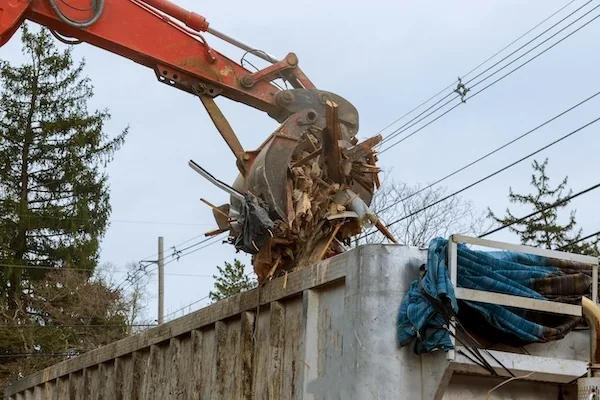
House Demolition
Full and partial knockdowns of brick-and-tile, weatherboard and double-storey homes, permit through to level site.
Learn more →From the demolition permit and the Western Power disconnection through to a swept, level block — arranged for you across the Perth metro.
Most people ringing about demolition are not really asking about machines. They are asking how long the block will sit idle, who talks to Western Power, and whether the fibro on the back lean-to is going to blow the budget. Those are the right questions, and they are the ones this site is built around.
We arrange residential, commercial and partial demolition right across Perth — from the limestone cottages of Fremantle and the beach shacks behind Scarborough Beach through to the 1990s brick-and-tile of Joondalup and the foothill blocks around Armadale. The work runs from a single kitchen strip-out up to a full knockdown and site clear ready for a builder to peg out.
Demolition in Western Australia is a paperwork job with an excavator attached. The order matters:
Steps two and four are where nearly every delayed Perth demolition goes wrong. Western Power abolishment and Water Corporation disconnection are utility processes with their own queues, and they cannot be hurried from site. Starting them the week the quote is accepted, rather than the week before the machines are booked, is the single biggest thing that keeps a project on schedule.
Fibro sheeting, eaves, backing boards behind meter boxes, old vinyl floor tiles and the corrugated sheeting on a lot of Perth carports were commonly made with asbestos cement. Homes built before 1990 are the high-risk group, and in the older suburbs it is the norm rather than the exception.
In WA, removing more than ten square metres of non-friable asbestos, or any friable asbestos at all, must be done by a licensed asbestos removalist working to the work health and safety regulations, with disposal at a landfill licensed to accept it. It happens before the main demolition, as a separate stage with its own cost and its own paperwork. The asbestos-affected demolition page sets out how that sequence works and what the clearance documentation should look like.
A house demolition is the big one, usually ahead of a knockdown rebuild. Behind it sit pool removal and filling, which Perth's sandy soils make comparatively straightforward, strip-out and soft demolition for renovations and commercial fit-outs, and garage and shed demolition for the Colorbond and limestone structures that come off a block before a subdivision.
Around those sit the finishing services: site clearing to get a block builder-ready, concrete removal for driveways and slabs, rubbish removal for everything that is not structural, and bulk mulch delivery once the ground is bare. Larger earthworks and plant hire run through the civil contracting page.
Renovators are usually after something smaller — a kitchen demolition or a bathroom strip-out — where the value is in protecting what stays rather than in the demolition itself.
We are not the cheapest number you will get, and there is no point pretending otherwise. Quotes that come in well under the rest usually leave out the permit, the asbestos, the verge bond or the disposal, and those costs do not disappear — they arrive later as a variation.
We also do not price a demolition over the phone. Access for a truck and an excavator, boundary proximity, what the neighbours' walls are doing and the state of the crossover all change the job, and none of that is visible from a street view screenshot.
Work is arranged from Joondalup and the northern corridor down through the central suburbs, out to Midland and the foothills, and south to Rockingham and Mandurah. The service area index has suburb pages covering the local council, the soil and the housing stock in each — including Fremantle, Scarborough, Cannington and Armadale.
For a sense of the numbers before you call, the demolition cost guide collects the ranges we actually quote against. Otherwise, call (08) 9516 0951 and describe the site.
A demolition permit from your local council, plus Western Power and Water Corporation disconnections, are arranged before a machine turns up. That sequencing is what keeps a job to schedule.
Anything built before 1990 in Perth is treated as suspect until tested. Licensed removal happens first, as its own step, with its own paperwork.
Demolition, concrete, rubbish removal and site clearing arranged through one number instead of four separate bookings.
Site visit, scope in writing, and a clear statement of what is and is not included before anyone commits.
Full and partial knockdowns of brick-and-tile, weatherboard and double-storey homes, permit through to level site.
Learn more →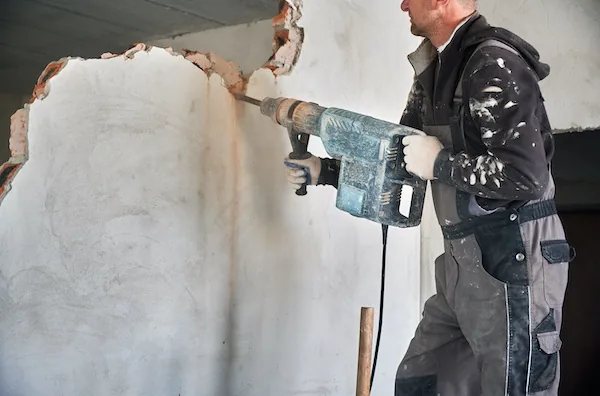
Fibreglass and concrete pools removed, the void backfilled in layers and compacted ready for whatever comes next.
Learn more →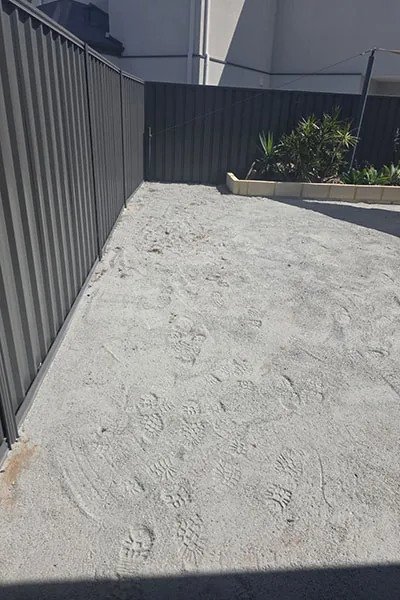
Shell demolition for in-ground and above-ground pools, including solid concrete structures and surrounding decking.
Learn more →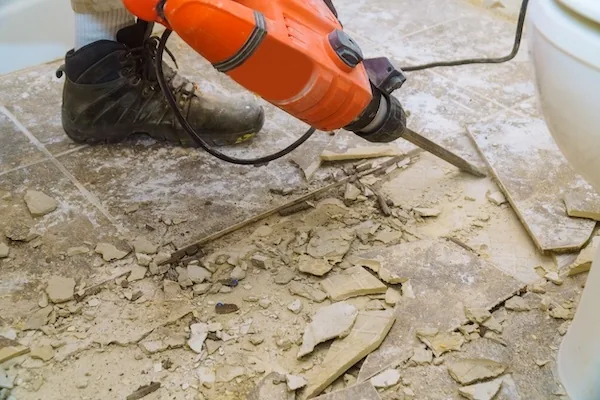
Internal demolition for offices, shops and homes — walls, ceilings, floors and fit-out stripped back to structure.
Learn more →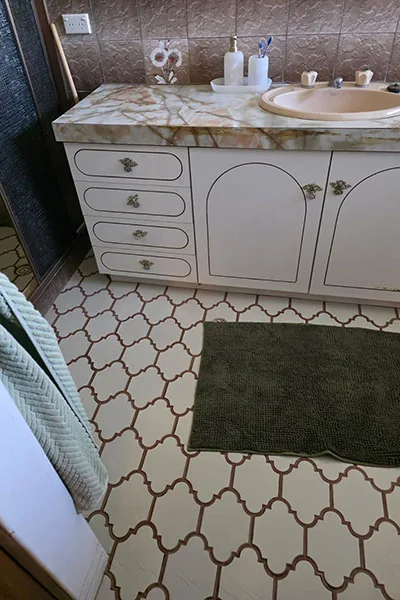
Cabinetry, benchtops, splashbacks and floor finishes out, services capped, floor ready for the new install.
Learn more →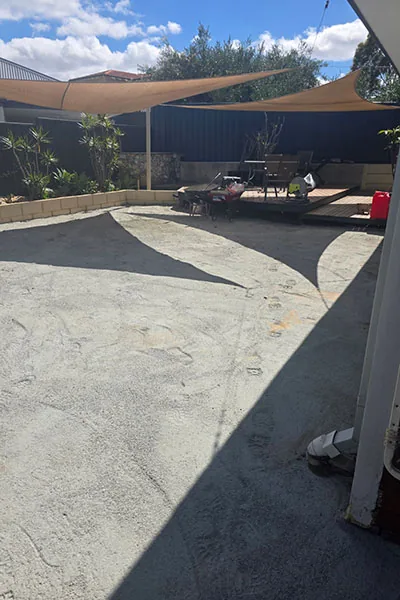
Vanity, bath, toilet, wall tiles and screed removed cleanly so waterproofing can start on a sound substrate.
Learn more →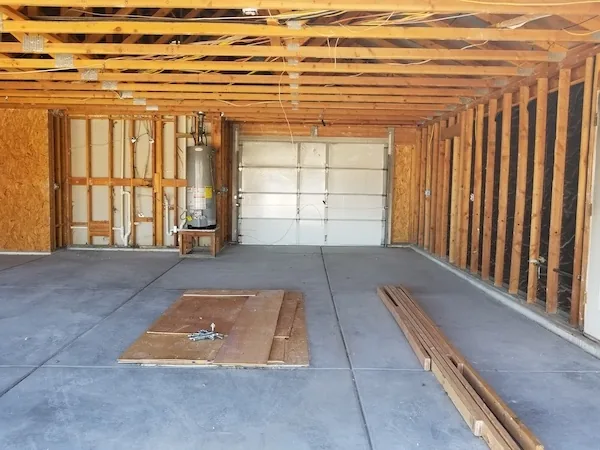
Pre-1990 Perth homes need an asbestos check first. We arrange licensed removal before demolition starts.
Learn more →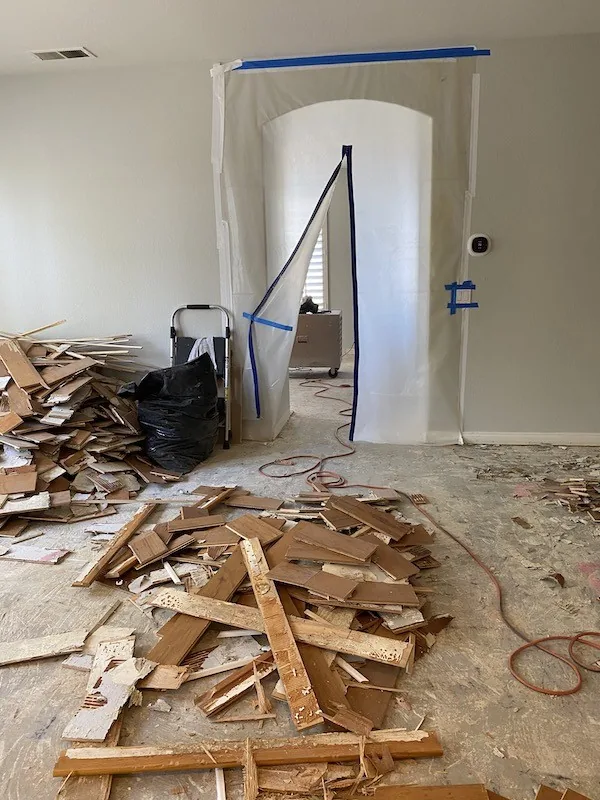
Colorbond sheds, limestone and brick garages, carports and patios removed, slab included if you want it gone.
Learn more →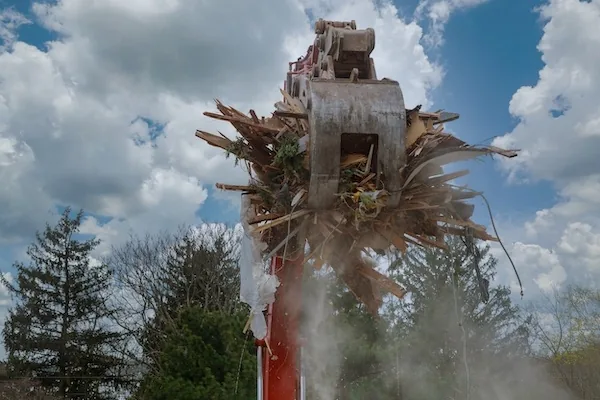
Vegetation, rubble, old slabs and fencing cleared off a block so the builder can set out and start pegging.
Learn more →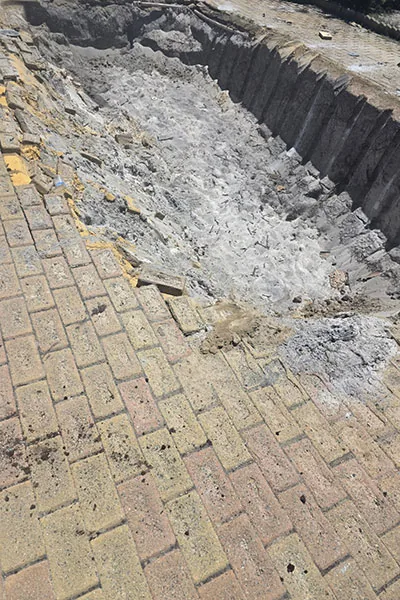
Driveways, paths, patios and slabs broken out and carted to a recycler rather than straight to landfill.
Learn more →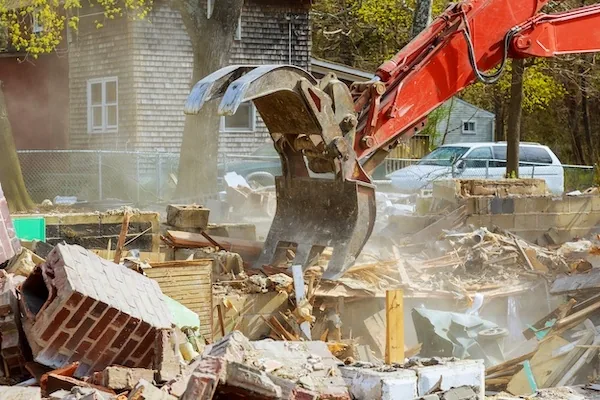
Household, commercial and construction waste collection — you pay for the volume you actually put on the truck.
Learn more →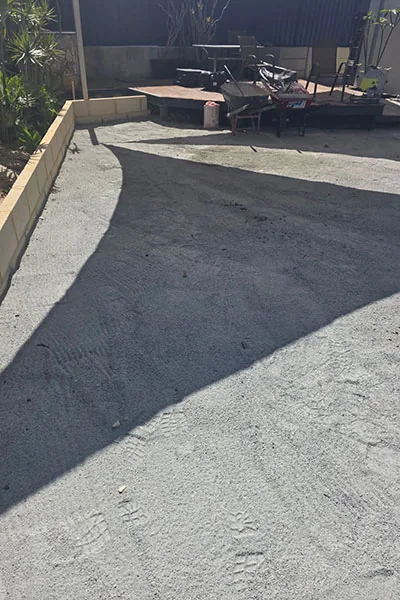
Bulk mulch delivered across Perth, useful once a cleared or backfilled site needs covering before landscaping.
Learn more →
Bulk earthworks, site preparation and plant hire for larger residential and commercial projects.
Learn more →We engaged David and the team to remove our above ground, solid concrete swimming pool, and associate led deck and fencing. It was a mammoth job, probably much harder than anyone anticipated! However they did a great job. The team were polite and professional, and did their absolute best. I'm deeply thankful to them for persevering with what was a horrible job!— Cohen Mounsey (Google review)
The work they did was spotless very professional I will recommend to anyone.. Good job David.— George Maemba (Google review)
We used Homeland Resources to clear our property to make way for our new home. They were able to complete the job to a very high standard exactly as required!— Jay (client, site clearing)
A standard detached house demolition in Perth typically runs between $25,000 and $35,000, and the whole process can take up to twelve weeks once permits and service disconnections are counted. Asbestos, difficult truck access, a two-storey structure, retaining walls or a pool on the same block all push the figure higher. A site visit is the only way to get a number you can rely on.
Yes. Under the Building Act 2011 a demolition permit must be issued by your local government before demolition work starts on a building or an incidental structure. The council will want proof that gas, power and water have been disconnected, and many Perth councils also require a bond against damage to the verge, kerb and crossover. We lodge the application as part of the job.
The machine work on a single-storey brick-and-tile house is usually two to four days. The calendar time is set by everything before that: the demolition permit, the Western Power abolishment, the Water Corporation disconnection and any asbestos removal. Those approvals are what turn a four-day job into an eight to twelve week project, so they get started first.
Brick, concrete and clean rubble go to a recycler and come back as road base or aggregate. Scrap metal is separated. Timber, plasterboard and mixed waste go to a licensed landfill. Asbestos is a separate stream and must go to a site licensed to accept it, with the disposal paperwork kept. Salvageable items are pulled out first where there is time to do it.
Yes. The work splits into residential knockdowns, commercial and industrial demolition, and partial demolition where part of a structure comes out and the rest stays. Commercial strip-outs of offices, shops and warehouses are handled as internal demolition, usually scheduled around trading hours to keep the business running.